Introduction
App functions
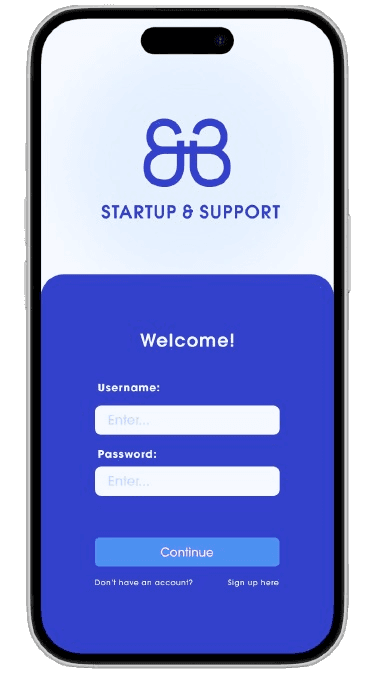
The project examines how universities can better support students launching their own businesses or student-led organizations. Research and student feedback show that many aspiring entrepreneurs struggle to turn ideas into reality due to early obstacles such as limited funding, lack of experience, and insufficient mentorship. To address these challenges, we developed an app offering structured guidance and a platform where students can connect, communicate, and chat.
I used figma for all of our prototype, and badges were drawn on procreate.
Our high-fidelity prototype brings clarity, structure, and support by unifying key ideas from each member. Our main focus is in user insights, and gives students a clear and collaborative path to get started with their own business.
Our functions includes task check list, this page helps students track daily goals and addresses the key user challenge of understanding where to start and helps students manage their workload effectively.
Community connection - This page allows users to join communities, share posts and threads, and connect with other student entrepreneurs. It also highlights the importance of collaboration and peer support for entrepreseneurial success, this communities page provides a way to grow engagement with peers.
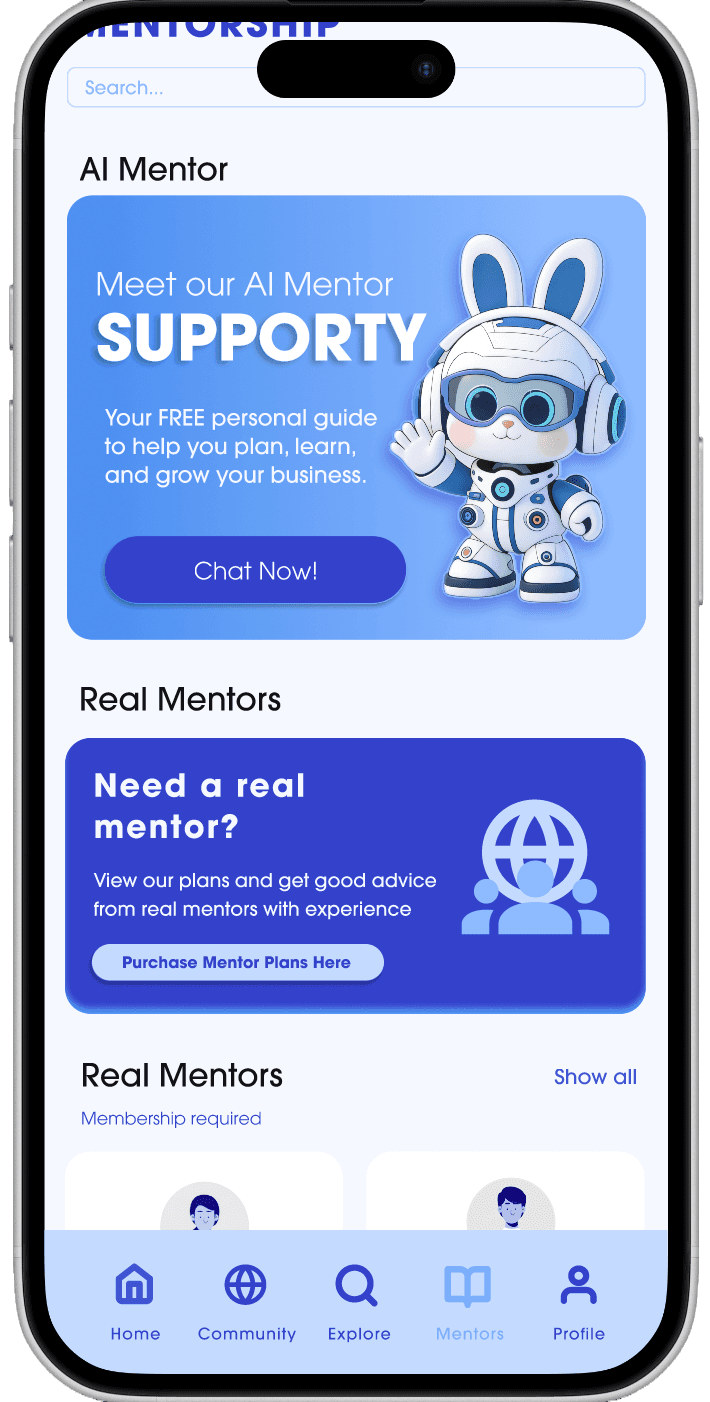
AI Mentors - This feature provides free personalized guidance, answers basic questions, and recommeneds resources. As students exoressed the need for fast, interactive support without feeling intimidated (gathered this data through interviews), this AI mentor bot - Supporty allows tailored free guidance, helping users clarify goals and reduce uncertainty.
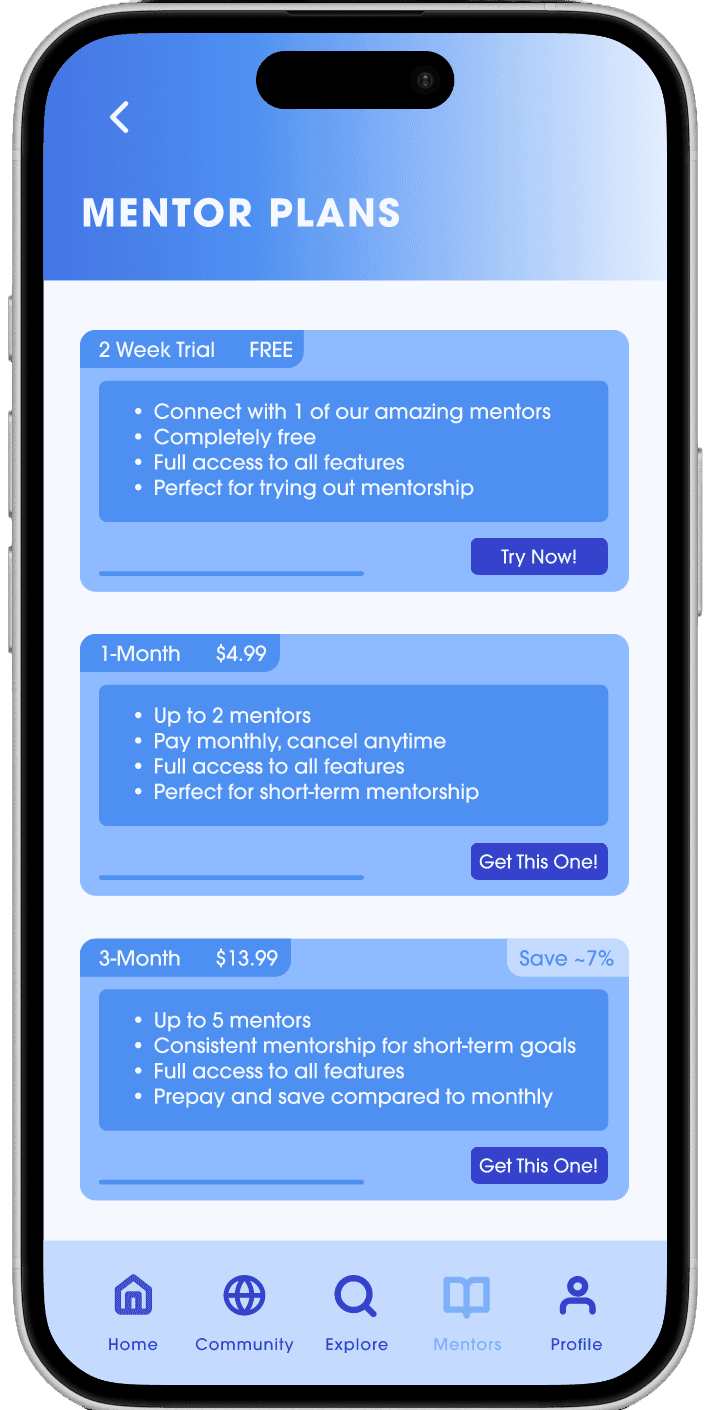
Real Mentors - Users can pay to connect with experienced mentors for guidance, suggestions, and support. This feature enables more targeted mentorship access. Interviews showed that beginner entrepreneurs often feel lost without direction, so real mentor support provides deeper, personalized learning over time. Our pricing is designed to be student-friendly by offering monthly and annual plans at more affordable rates.
Learn & Explore - This page offers a curated selection of videos and lessons covering essential startup skills. It simplifies complex topics by presenting them in a structured way, helping students build foundational knowledge and confidence before launching their business or student club.
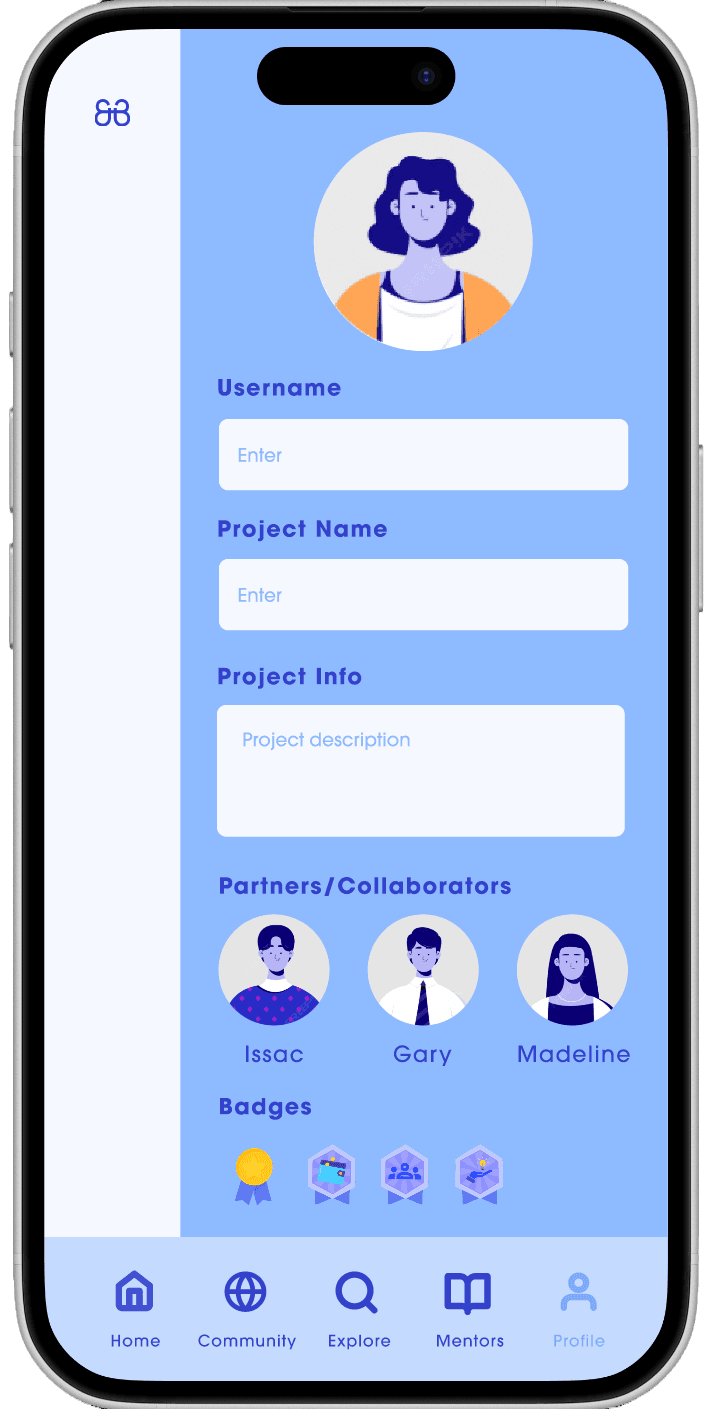
Gamified Badges: Badges represent unlockable milestones within the “Learn & Explore” section. This feature was added after student interviews showed that gamified rewards can strengthen motivation, engagement, and follow-through.
Chatting With Partners: This feature enables users to communicate with collaborators to share updates and ask questions. It was implemented because interviewees emphasized that having a partner helps reduce feelings of isolation and provides a dependable support system throughout the startup process.
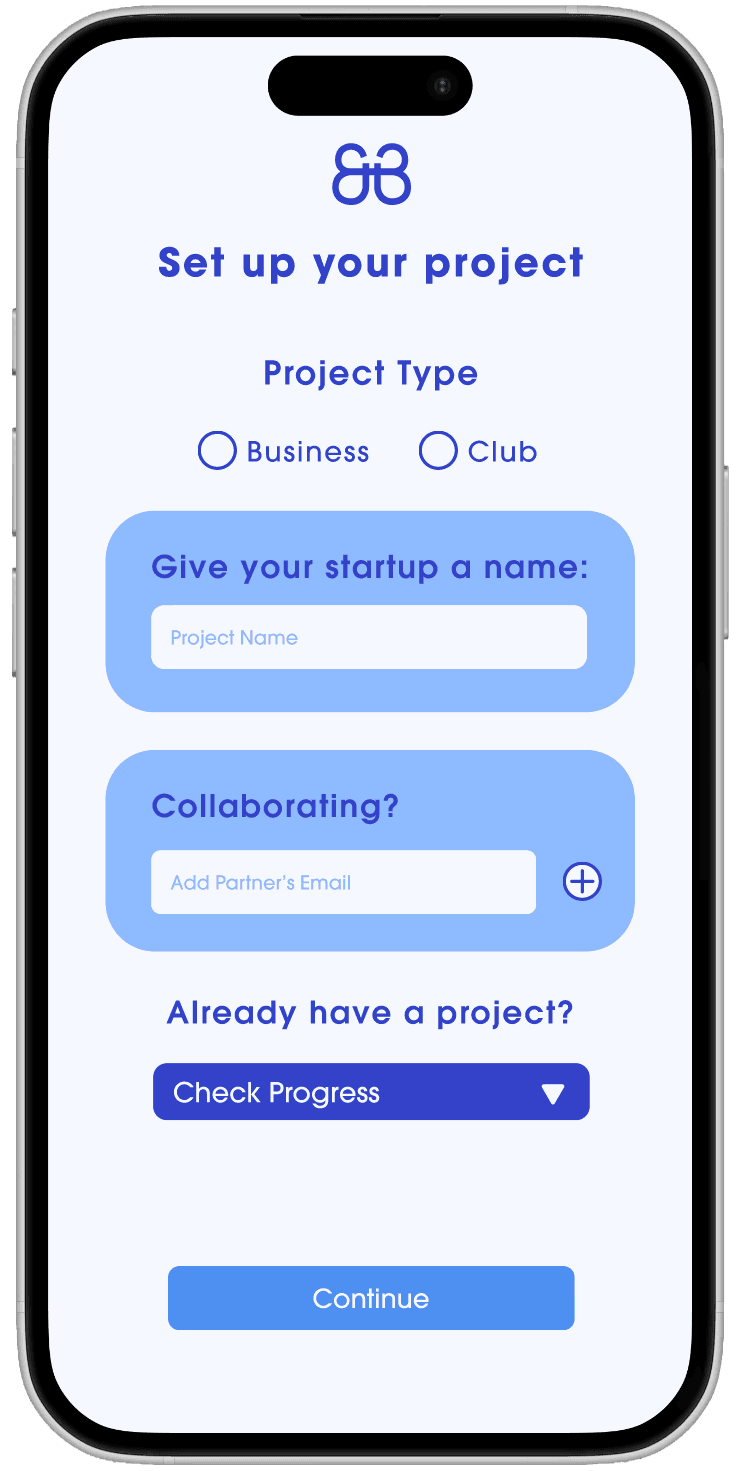
Set up your project: this page is there for users to create a project, this project will later be shown on their user profile
Summary
By the end of this project, we learned that app design is not just about creating features, but about understanding user needs and translating them into meaningful solutions. Our app supports students in starting their own businesses or organizations by offering structured guidance, mentorship, and community support. Through research, we identified key concerns such as limited budgets, which informed our approach to making mentorship more accessible.
Throughout the process, I strengthened my Figma skills and developed a deeper understanding of user-centered design. A major challenge was limited time due to team scheduling conflicts, requiring us to complete most of the work within a short period. As new ideas were added, implementing interactions in Figma also became increasingly complex under time pressure.
To address this, I used external resources like YouTube tutorials to quickly learn advanced techniques, while maintaining consistent communication with my team to stay aligned. I focused on completing my tasks efficiently while ensuring they supported the overall direction of the project.
If revisited, I would refine the prototype further by improving interaction details and incorporating more advanced features. This experience reinforced the importance of time management, adaptability, and user-focused thinking in design.