This is an 8-minute group documentary created by me. The documentary examines the Myers-Briggs Type Indicator (MBTI) and its impact on how people perceive themselves and interact with others. Nowadays, many people use MBTI as a tool to better understand their emotions, behaviours, and even whether it is “right” to continue or start a relationship. We found this especially interesting, which is why we chose MBTI as our topic. Ultimately, the film encourages self-acceptance and emphasizes that MBTI can reveal aspects of who we are, but it should never be used to define or limit us—each person and their MBTI type is unique.
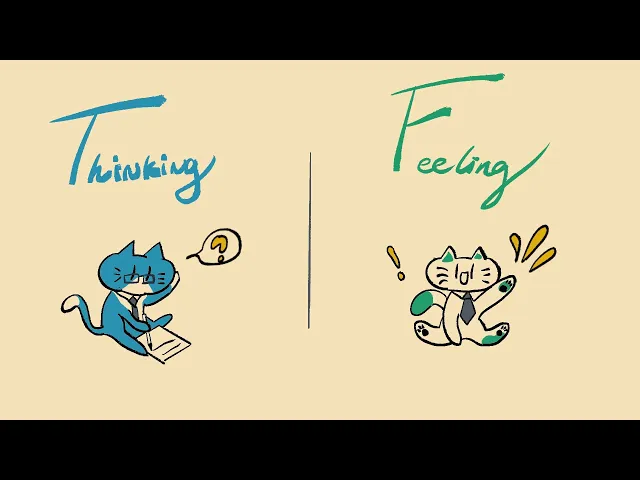
My main role in this project was animation. I used Procreate to create all the transitions. Although there were challenging moments when communicating with my teammate—since we all had different ideas about the art style—I ended up drawing several versions of the animation. In the end, the final result and the collaborative process were enjoyable.
I was also responsible as a video shooter role and partly editing. Footage was shot collaboratively. I used a dji Pocket 3 to capture some scenes in public places such as malls, libraries, and other urban areas. A Canon R7 was used for filming in school buildings, and other appropriate locations as needed.
To increase the professionalism of our documentary, we visited our psychology lecture building and conducted street interviews with students studying psychology and the arts. In total, we interviewed around 6 to 7 participants. We prepared two versions of our question list: one for participants who already knew about MBTI and another for those who did not. To make the documentary even more credible, we contacted a psychology professor and requested an interview. We also developed a more in-depth set of questions to gather additional expert insights.
My Role
Interviews
Survey
Editing
Summary
Introduction
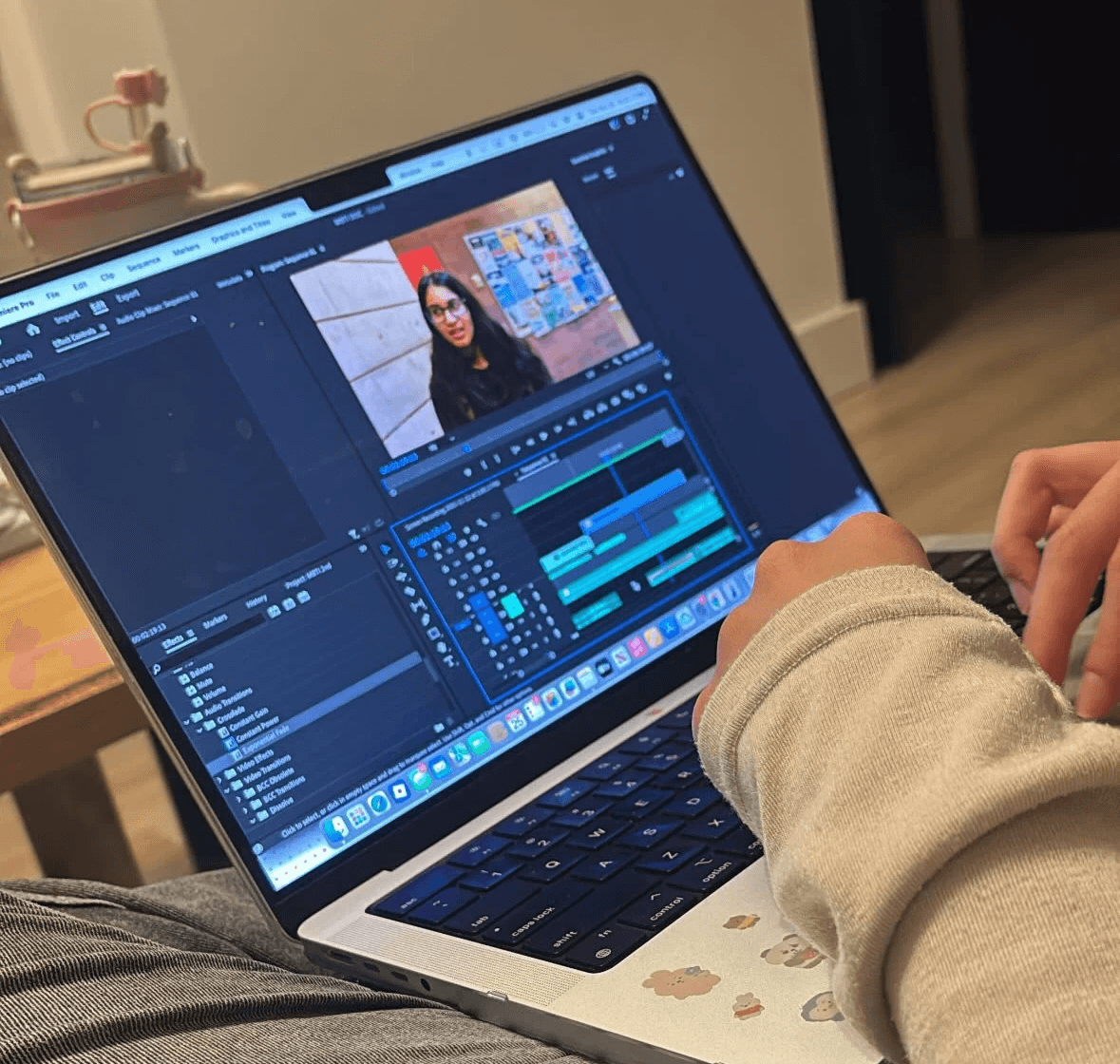
The entire editing process was done in Adobe Premiere Pro. I served as a sub-editor, stepping in to make changes when needed and assisting with transitions and effects.
By the end of this video, we learned that every MBTI type is unique and valuable in its own way. Human beings are way too complex to be reduced to just four letters. There’s nothing wrong with taking the MBTI as a fun, interesting activity, but it’s important to remember it’s useful for only one thing - Entertainment!!
Through creating this documentary, I strengthened my animation skills in Procreate and improved my ability to collaborate within a team. I learned to present multiple iterations of my work, communicate design decisions clearly, and respond to feedback with confidence.
The project also brought challenges. Animation was time-consuming, and not all of my work was included in the final outcome. Frequent revisions and shifting expectations made it difficult to manage time, while filming required translating abstract ideas into clear visuals.
To address these issues, we focused on aligning our core message and improving communication. I adapted by iterating based on feedback while contributing my own perspective. We also established clearer deadlines and approached filming more spontaneously to capture meaningful moments.
If revisited, I would further refine the animations and incorporate more supporting visuals such as B-roll footage. This experience highlighted the importance of communication, adaptability, and strong visual storytelling in collaborative projects.
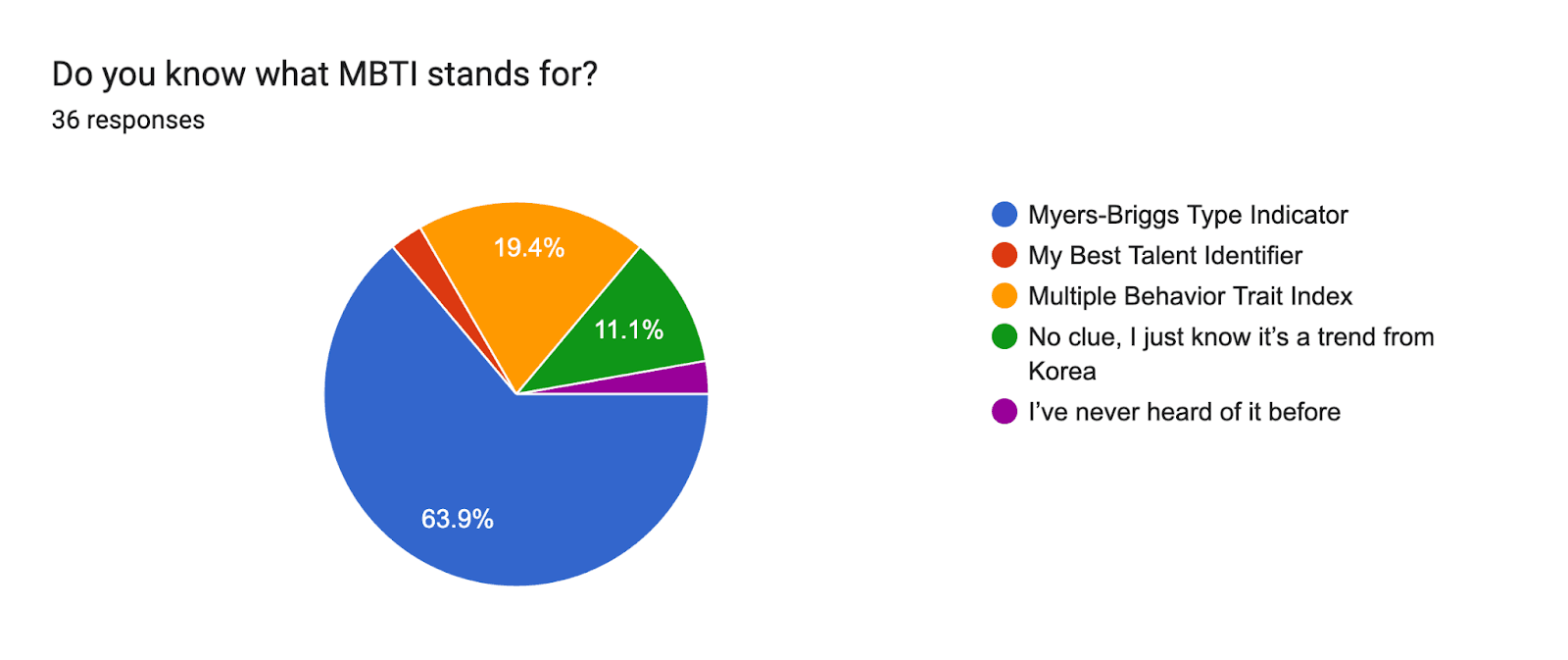
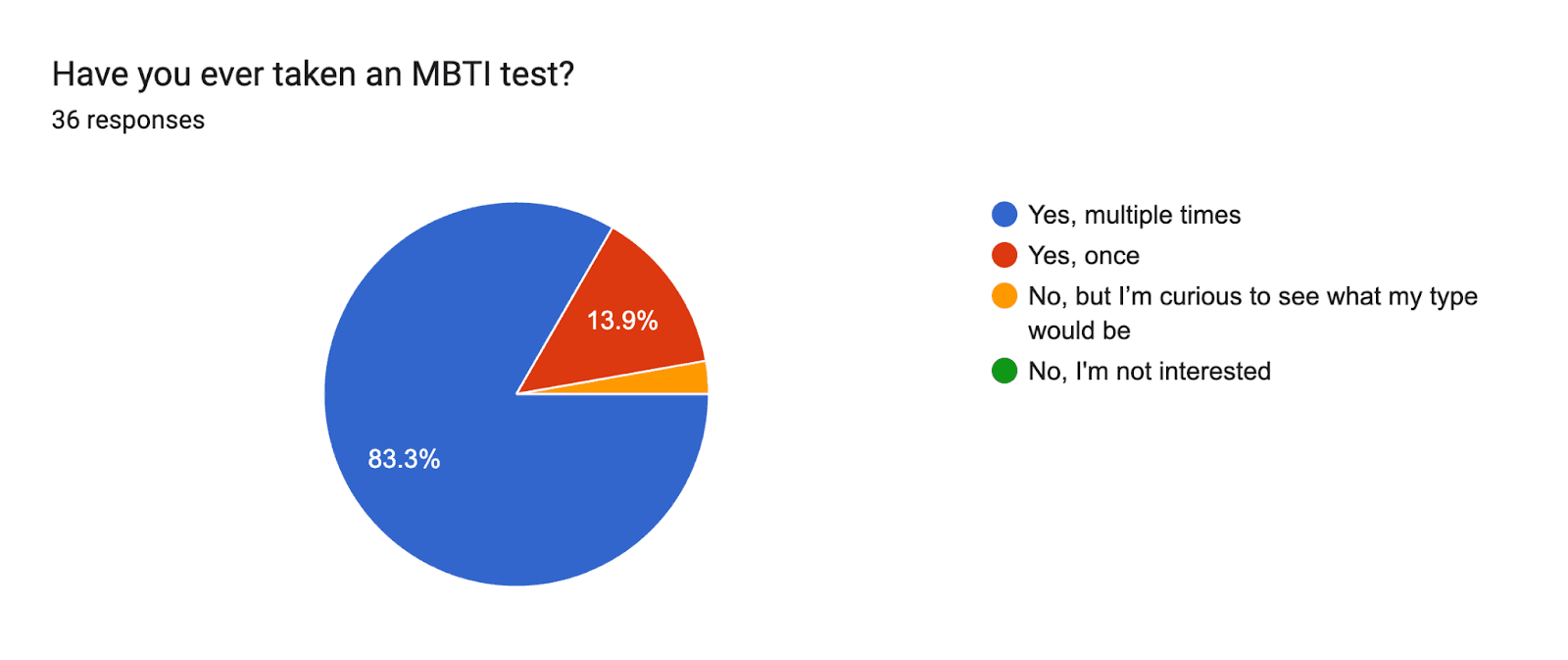
We created a survey with questions focused on whether participants knew about MBTI and their personal opinions. We asked whether they felt MBTI represents them, as well as how much they trust it. This allowed us to understand a broader range of perspectives on MBTI, beyond only students studying psychology.
